Battle of the Atlantic | Vibepedia
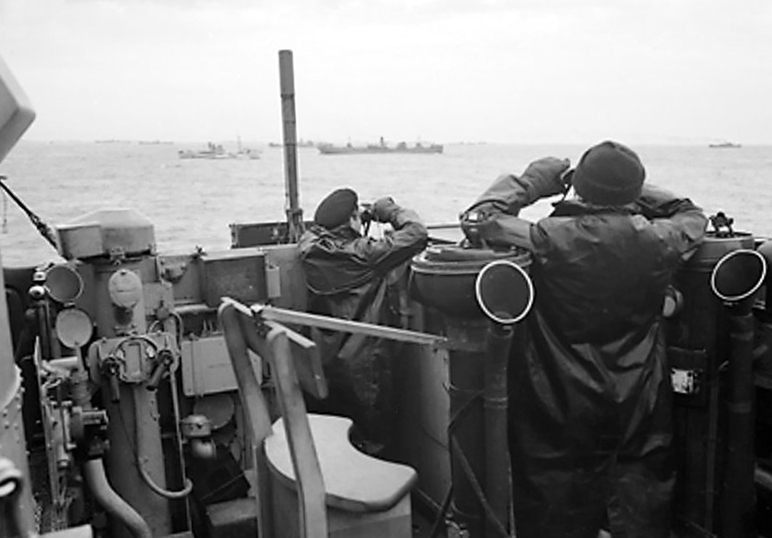
The Battle of the Atlantic was a brutal, drawn-out struggle for control of the vital North Atlantic sea lanes, pitting the Allied powers against Nazi…
Contents
Overview
The struggle for control of the Atlantic began with Germany's attempt to strangle Britain through unrestricted submarine warfare, a strategy reminiscent of World War I's U-boat campaigns. Initially, Germany's U-boat fleet was relatively small, but its effectiveness was amplified by the vastness of the Atlantic and the limited anti-submarine warfare (ASW) capabilities of the Allies. The early years saw a desperate struggle for the Allies to adapt, facing losses that threatened to cripple their ability to wage war. The entry of the United States into the war dramatically shifted the balance, bringing crucial industrial might and naval resources to the Allied cause, though it took time to effectively counter the U-boat threat.
⚙️ How It Works
The core mechanic of the Battle of the Atlantic revolved around the Allied convoy system versus German U-boat wolfpacks. Merchant ships, carrying vital supplies from North America to Britain and the Soviet Union, sailed in organized convoys escorted by naval vessels and aircraft. These convoys aimed to concentrate defensive power and make it harder for U-boats to operate freely. In response, German U-boats, reportedly operating in coordinated 'wolfpacks,' would attempt to ambush these convoys, using torpedoes and deck guns. The Allies countered with improved ASW tactics, including depth charges, hedgehogs, and later, air cover from escort carriers and land-based aircraft, while also developing technologies like radar and sonar to detect submerged U-boats. The Luftwaffe also played a role, conducting anti-shipping strikes and reconnaissance.
📊 Key Facts & Numbers
The scale of destruction in the Battle of the Atlantic was staggering. The human cost was immense, with tens of thousands of sailors and airmen lost. By the war's end, the Allies had deployed over 3,500 escort vessels and 4,000 aircraft for anti-submarine warfare. Germany built nearly 1,200 U-boats during the war, sinking over 3,000 Allied ships. The peak of U-boat effectiveness occurred in 1942, when they sank over 1,500 Allied vessels.
👥 Key People & Organizations
Key figures who shaped the Battle of the Atlantic include Admiral Karl Dönitz, who masterminded the U-boat campaign for Germany and later succeeded Hitler as Führer. Admiral Sir Max Horton led Britain's Western Approaches Command during a critical period, orchestrating the defense against the U-boats. Winston Churchill, as British Prime Minister, famously declared the Battle of the Atlantic to be his "constant preoccupation." The Royal Navy, Royal Canadian Navy, and the burgeoning United States Navy were the primary naval forces engaged, supported by the Royal Air Force and the USAAF. Organizations like the Admiralty's anti-submarine warfare divisions and the Combined Operations Headquarters were crucial in developing and implementing Allied strategies.
🌍 Cultural Impact & Influence
The Battle of the Atlantic profoundly influenced naval warfare doctrine and technological development. The constant threat of U-boats spurred rapid advancements in sonar, radar, code-breaking (particularly the Enigma machine), and aircraft carrier technology. The success of the convoy system became a blueprint for protecting maritime trade in future conflicts. Culturally, the battle entered the popular imagination through films like 'The Cruel Sea' and 'Das Boot,' depicting the grim realities faced by sailors on both sides. The sheer scale of loss and the prolonged nature of the struggle cemented its status as a defining, albeit often overlooked, theater of World War II, highlighting the critical role of logistics and sea control in global conflict.
⚡ Current State & Latest Developments
As of 2024, the legacy of the Battle of the Atlantic continues to be studied by naval historians and strategists. While the direct conflict ended in 1945, the lessons learned about ASW, convoy protection, and the importance of intelligence remain highly relevant. Modern naval powers continue to invest heavily in submarine technology and counter-submarine capabilities, a direct lineage from the cat-and-mouse game played out in the North Atlantic. The ongoing geopolitical tensions and the resurgence of submarine warfare in various regions ensure that the strategic principles tested and proven during this battle remain a cornerstone of maritime security discussions.
🤔 Controversies & Debates
A significant debate surrounds the effectiveness of Allied intelligence, particularly concerning the breaking of the Enigma code. While widely credited with turning the tide, some historians argue that the Allies sometimes withheld crucial intelligence to protect their code-breaking capabilities, leading to unnecessary losses. Another point of contention is the strategic decisions made by both sides; for instance, Germany's late decision to focus heavily on U-boat production, and the Allies' initial underestimation of the U-boat threat. The ethical implications of unrestricted submarine warfare, employed by Germany, and the strategic bombing campaigns by the Allies, also remain subjects of historical and ethical scrutiny.
🔮 Future Outlook & Predictions
The future of anti-submarine warfare, directly descended from the Battle of the Atlantic, is increasingly focused on autonomous systems, advanced sensor networks, and cyber warfare. Nations are developing unmanned underwater vehicles (UUVs) and advanced drone technology for reconnaissance and attack, potentially reducing the human risk inherent in past conflicts. The increasing sophistication of submarine stealth technology by potential adversaries like Russia and China means that the need for effective ASW will only grow. Future naval engagements may see the lines between surface, air, and subsurface warfare blur even further, building upon the integrated approach pioneered during the Atlantic campaign.
💡 Practical Applications
The primary practical application of the Battle of the Atlantic's lessons lies in modern naval strategy and defense. The convoy system, though evolved, remains a fundamental concept for protecting maritime trade routes. Advances in sonar, radar, and electronic warfare, all spurred by the battle, are now integrated into virtually every modern naval vessel and aircraft. Furthermore, the development of specialized ASW aircraft like the Lockheed P-2 Neptune and later the Lockheed P-3 Orion, directly addresses the need for long-range patrol and attack capabilities that proved vital in the Atlantic. The strategic importance of controlling sea lanes, as demonstrated by this battle, continues to inform global trade and military power projection.
Key Facts
- Category
- history
- Type
- event