Carl Humann | Vibepedia
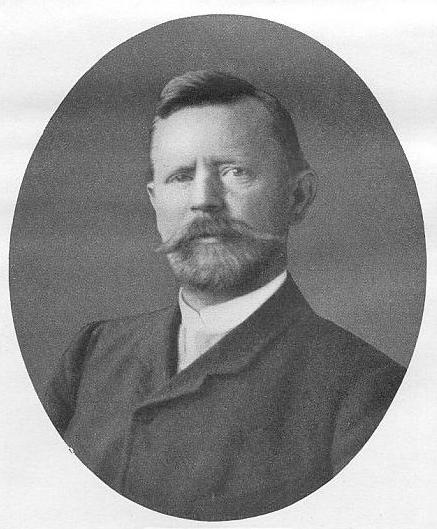
Carl Humann was a German engineer, architect, and archaeologist whose meticulous work fundamentally reshaped the understanding of ancient Greek civilization…
Contents
Overview
Carl Humann was born in Steele, near Essen, in the Kingdom of Prussia. His early life was marked by a strong technical education, culminating in studies at the Bauakademie (Building Academy) in Berlin and the Burggymnasium Essen. This foundation in engineering and architecture proved crucial for his later career. Humann's initial professional endeavors were in civil engineering, including significant railway construction projects in the Ottoman Empire. It was during his tenure as a government engineer in Anatolia, beginning in the 1860s, that his path veered towards archaeology. His keen eye for detail and understanding of structural integrity allowed him to identify promising ancient sites that others overlooked. His early work in surveying and infrastructure development across the region provided him with invaluable geographical knowledge and logistical experience, which would later be instrumental in his most famous archaeological expeditions.
⚙️ How It Works
Humann's approach to archaeology was deeply rooted in his engineering background. Unlike earlier treasure hunters, he prioritized systematic excavation and documentation. When he began excavating at Pergamon, his engineering skills were paramount in understanding the site's complex stratigraphy and the monumental scale of the structures. He employed detailed surveying techniques, meticulously recording the position and context of every artifact and architectural fragment. Humann's methods involved careful planning of trenches, precise measurement, and the use of scaffolding and lifting equipment to safely extract massive stone blocks, such as those belonging to the Pergamon Altar. This methodical process ensured that the archaeological context was preserved as much as possible, allowing for later reconstruction and scholarly analysis, a stark contrast to the more destructive methods prevalent at the time.
📊 Key Facts & Numbers
The excavation of the Pergamon Altar, led by Humann, was a massive undertaking. The sheer scale of the Pergamon Altar frieze, depicting the Gigantomachy, measures over 113 meters in length and stands nearly 3.5 meters high. Humann's team, often numbering hundreds of local workers, worked under challenging conditions for nearly eight years. The recovered pieces were transported by ship to Berlin, where they formed the centerpiece of the newly constructed Pergamon Museum's collection, a testament to the immense volume and significance of the find. This single excavation project provided an unprecedented wealth of material for understanding Hellenistic art and architecture, with its findings influencing art historical scholarship for over a century.
👥 Key People & Organizations
Humann's career was significantly shaped by his collaborations and employers. He worked under the patronage of Louis Merton, a wealthy industrialist who provided crucial financial backing for his early archaeological endeavors. His most significant institutional affiliation was with the Staatliche Museen zu Berlin (National Museums in Berlin), which officially sponsored the Pergamon excavations and facilitated the transport and reconstruction of the altar. Key figures like Ernst Curtius, who had previously led excavations at Olympia, provided academic guidance and support. Humann also worked closely with local authorities and communities in Anatolia, navigating complex political and social landscapes. His son, Hans Humann, later became a prominent figure in German archaeology himself, though his career was marked by controversy.
🌍 Cultural Impact & Influence
The discovery and reconstruction of the Pergamon Altar had a profound cultural impact, solidifying Berlin's status as a major center for classical antiquities and dramatically influencing the public's perception of ancient Greek art. The sheer grandeur of the altar, meticulously reassembled, became a symbol of Hellenistic artistic achievement and a major draw for museum visitors. Humann's systematic approach to excavation also elevated the scientific standards of archaeology, moving it away from mere artifact hunting towards a more contextual and preservation-focused discipline. His work inspired subsequent German archaeological expeditions in Anatolia, such as those at Ephesus and Miletus, further cementing Germany's leading role in classical archaeology during the late 19th and early 20th centuries. The Pergamon Altar remains a cornerstone of the Pergamon Museum's collection, continuing to captivate audiences worldwide.
⚡ Current State & Latest Developments
While the major excavations led by Carl Humann concluded by the late 1880s, the legacy of his work continues to evolve. The Pergamon Museum itself is currently undergoing a multi-year renovation, with significant portions, including the Pergamon Altar hall, closed to the public. This closure has spurred renewed interest in the original excavation contexts and the challenges of preserving such monumental artifacts. Ongoing research by scholars at institutions like the Humboldt University of Berlin continues to analyze the vast archives and artifact collections from Humann's digs, employing new technologies like 3D scanning and digital reconstruction to gain fresh insights into the altar's original appearance and context. The debate over the ethics of large-scale artifact removal from their original sites also remains a live issue, prompting critical re-evaluation of historical excavation practices.
🤔 Controversies & Debates
The most significant controversy surrounding Carl Humann's work revolves around the removal of the Pergamon Altar from its original site to Berlin. Critics, both in his time and today, argue that this constituted a form of cultural appropriation or looting, stripping the monument from its historical and geographical context. While Humann operated within the prevailing norms of archaeological practice for the late 19th century, where major finds were often transferred to European museums, the scale of the Pergamon Altar's removal remains a point of contention. Debates persist regarding the ethical implications of such actions and the potential for repatriation of significant cultural heritage. Furthermore, the legacy of his son, Hans Humann, who was involved in controversial archaeological work and later espoused problematic political views, sometimes casts a shadow over Carl Humann's own reputation, though their professional activities were distinct.
🔮 Future Outlook & Predictions
The future outlook for Carl Humann's legacy involves a dual focus on preservation and reinterpretation. As the Pergamon Museum undergoes its extensive renovation, there is an opportunity to re-examine the display and contextualization of the Pergamon Altar, potentially incorporating more information about its discovery and the site of Pergamon itself. Advances in digital archaeology and virtual reality offer possibilities for creating immersive experiences that allow audiences to explore the altar in its original setting or visualize its reconstruction with unprecedented detail. Furthermore, ongoing archaeological research in Turkey continues to uncover new layers of history at sites like Pergamon, potentially offering a more complete understanding of the city's development and Humann's place within that broader narrative. The ethical discussions surrounding archaeological repatriation will undoubtedly continue to shape how Humann's discoveries are viewed and managed.
💡 Practical Applications
Humann's primary practical application was in the field of archaeology itself, establishing new standards for excavation and documentation. His engineering skills were directly applied to the construction and reconstruction of monumental structures, most notably the Pergamon Altar, which was painstakingly reassembled in the Pergamon Museum. His work also had practical implications for urban planning and infrastructure development during his earlier career in the Ottoman Empire, where he contributed to railway construction and surveying projects. The detailed maps and surveys he produced provided valuable data for subsequent development. The methodologies he pioneered in archaeological fieldwork, emphasizing context and preservation, are still foundational principles taught in university archaeology programs wor
Key Facts
- Category
- history
- Type
- topic