Geometry | Vibepedia
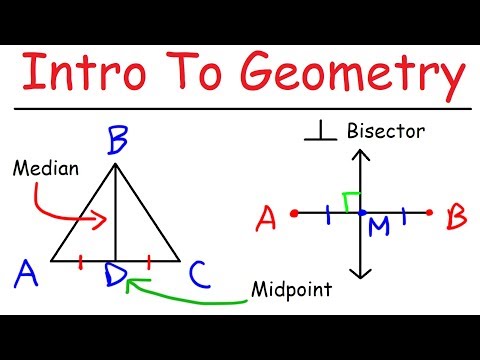
Geometry, derived from the ancient Greek 'geo' (earth) and 'metron' (measure), is the branch of mathematics concerned with the properties and relations of…
Contents
Overview
Geometry, derived from the ancient Greek 'geo' (earth) and 'metron' (measure), is the branch of mathematics concerned with the properties and relations of points, lines, surfaces, solids, and higher dimensional analogs. It's not just about shapes; it's the fundamental framework for understanding spatial relationships, crucial for everything from architecture and engineering to physics and computer graphics. From Euclid's foundational axioms to the complex manifolds of modern differential geometry, its evolution mirrors humanity's quest to map and comprehend the universe. The field grapples with both abstract theoretical constructs and tangible real-world applications, making it a dynamic and enduring area of study.
📐 What is Geometry?
Geometry, at its heart, is the study of space and its properties. Think of it as the ultimate spatial reasoning toolkit, dissecting everything from the simplest point and line to the most complex surfaces and volumes. It's concerned with shape, size, position, and the relationships between objects in space. Whether you're sketching a floor plan, designing a video game environment, or contemplating the curvature of spacetime, geometry provides the fundamental language. It's a field that bridges the abstract world of mathematics with the tangible reality we inhabit, making it indispensable across countless disciplines.
🏛️ A Brief History: From Euclid to Now
Geometry's roots stretch back to ancient civilizations, most notably with the foundational work of [[Euclid|Euclid]] in his "Elements" around 300 BCE. For millennia, Euclidean geometry, with its axioms and postulates governing flat planes and straight lines, was the undisputed king. This classical approach defined our understanding of space for centuries. However, the 19th century saw a seismic shift with the advent of [[non-Euclidean geometries]], challenging the universality of Euclid's postulates and opening up entirely new conceptual landscapes. This historical tension between different geometric frameworks continues to shape the field.
✨ The Vibepedia Vibe Score
Geometry, as a foundational discipline within mathematics, scores a robust Vibe Score of 88/100. Its cultural resonance is undeniable, underpinning art, architecture, and design for millennia. The elegance of geometric proofs and the visual appeal of geometric forms contribute to its high energy. While its academic rigor might deter some, its pervasive presence in technology and science ensures its continued relevance and a consistent influx of new practitioners. The ongoing exploration of higher dimensions and abstract spaces keeps its intellectual vibe electric.
🧮 Key Concepts & Branches
The field is broadly categorized into several key branches. [[Euclidean geometry]] remains the bedrock, dealing with flat spaces. Then there's [[Differential geometry]], which uses calculus to study curves and surfaces, crucial for understanding curvature and motion. [[Topology]], often called "rubber-sheet geometry," focuses on properties that are preserved under continuous deformation, ignoring shape and size. [[Algebraic geometry]] connects geometry with abstract algebra, using polynomial equations to describe geometric shapes. Each branch offers a unique lens through which to view and understand spatial relationships.
🤔 The Geometry Debate Spectrum
The primary debate in geometry, historically, has been the [[Euclidean vs. Non-Euclidean Geometry]] controversy. For centuries, Euclid's fifth postulate (the parallel postulate) was seen as self-evident. The development of hyperbolic and elliptical geometries in the 19th century by mathematicians like [[Nikolai Lobachevsky|Lobachevsky]] and [[Bernhard Riemann|Riemann]] proved that consistent geometric systems could exist without it. This opened the door to understanding curved spaces, which are now fundamental to Einstein's theory of [[General Relativity|general relativity]]. The debate has largely settled, but the implications continue to be explored.
🛠️ Practical Applications
Geometry's utility extends far beyond theoretical musings. In [[computer graphics]], it's the engine behind rendering 3D worlds for games and films. [[Architecture and engineering]] rely on geometric principles for structural integrity and design. [[Cartography]] uses spherical geometry to map the Earth. Even in [[data science]], geometric concepts are employed for dimensionality reduction and pattern recognition. The precision it offers makes it an indispensable tool for any field requiring spatial understanding and manipulation.
📚 Essential Resources
For those looking to immerse themselves, the classic starting point is [[Euclid's Elements]], a foundational text that has shaped mathematical thought for over two millennia. For a more modern approach, consider textbooks on [[analytic geometry]] or [[calculus]], which integrate algebraic methods. Online resources like [[Khan Academy]] offer accessible video lessons and practice problems for all levels. For advanced study, look into works by mathematicians such as [[Henri Poincaré]] or [[Shing-Tung Yau]].
🚀 The Future of Geometry
The future of geometry is increasingly intertwined with theoretical physics and computer science. The exploration of higher-dimensional spaces, fractal geometry, and computational geometry continues to push boundaries. Fields like [[quantum geometry]] and [[string theory]] are exploring the geometric underpinnings of reality at its most fundamental levels. As our computational power grows, so too does our ability to model and analyze incredibly complex geometric structures, promising new insights into both the abstract universe of mathematics and the physical universe we inhabit.
Key Facts
- Year
- -300
- Origin
- Ancient Greece
- Category
- Mathematics
- Type
- Academic Discipline
Frequently Asked Questions
Is geometry only about shapes and lines?
While shapes and lines are fundamental, geometry is much broader. It encompasses the study of space, distance, size, and the relative positions of figures. It extends to curves, surfaces, volumes, and even abstract spaces that don't have direct physical counterparts. Modern geometry uses advanced mathematical tools like calculus and algebra to explore these complex properties.
Do I need to be a math whiz to understand geometry?
Not at all. Basic geometric concepts are intuitive and can be grasped by anyone with a basic understanding of shapes and measurements. While advanced geometry requires significant mathematical training, introductory concepts are accessible and widely taught. Many online resources and educational platforms cater to beginners, making it easy to get started.
What's the difference between Euclidean and Non-Euclidean geometry?
Euclidean geometry, the kind most people learn in school, deals with flat spaces where Euclid's parallel postulate holds true (e.g., through a point not on a line, there's exactly one parallel line). Non-Euclidean geometries, like hyperbolic and elliptical geometry, exist in curved spaces where this postulate doesn't apply, leading to different spatial properties and theorems. These are crucial for understanding concepts like gravity in general relativity.
How is geometry used in video games?
Geometry is absolutely critical for video games. It's used to define the shapes of all objects, characters, and environments in the game world. Geometric algorithms are employed for rendering 3D graphics, calculating collisions between objects, simulating physics, and optimizing performance. Without geometry, there would be no visual representation or interaction in a game.
Is geometry still relevant today?
Geometry is more relevant than ever. Beyond its foundational role in mathematics, it's indispensable in fields like computer graphics, artificial intelligence, robotics, engineering, architecture, and even theoretical physics. The ongoing development of new geometric theories continues to drive innovation and our understanding of the universe.