Lexicography | Vibepedia
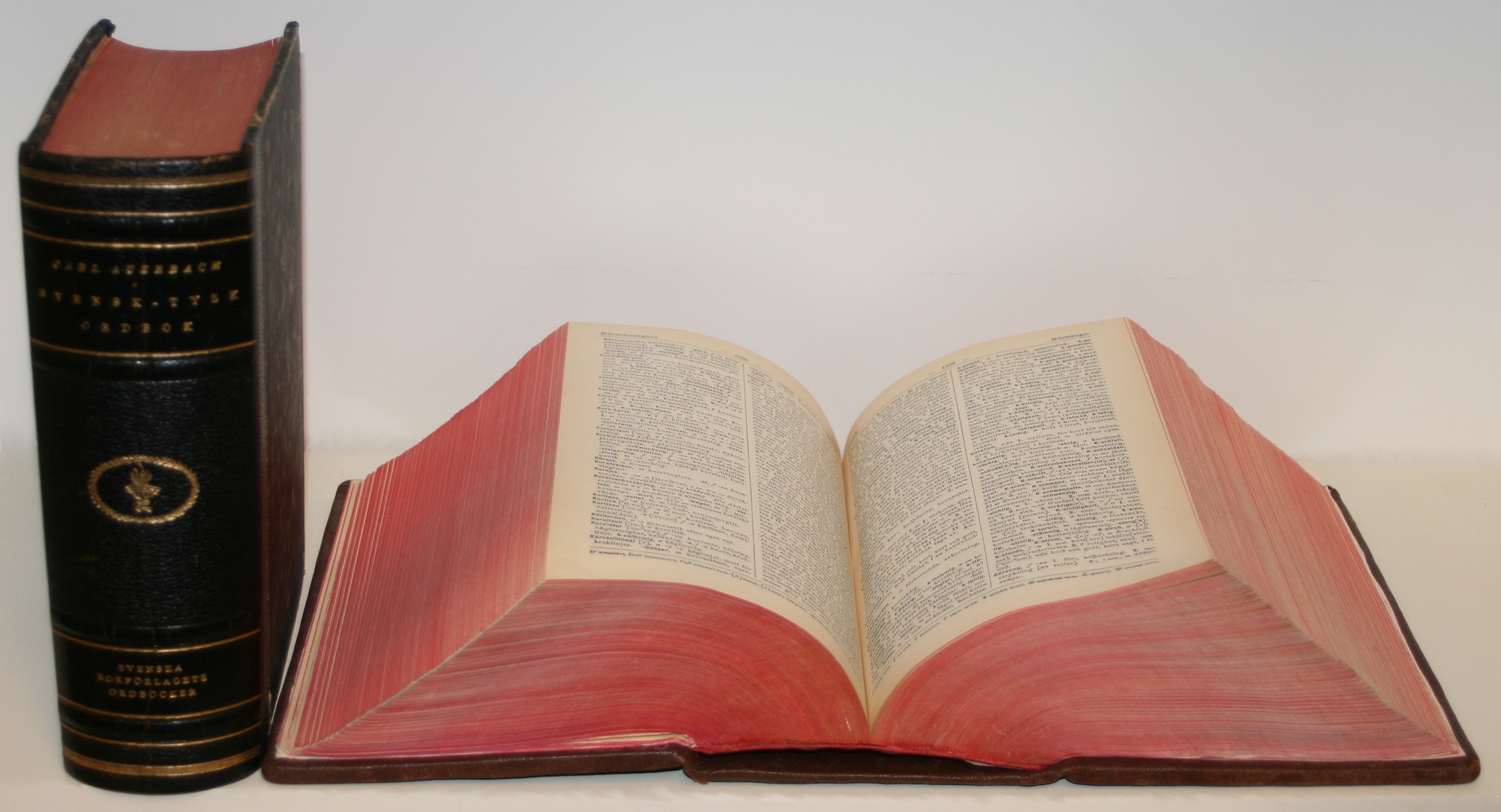
Lexicography is the discipline dedicated to the study of lexicons and the practical art of compiling dictionaries. It bifurcates into practical lexicography…
Contents
Overview
Lexicography is the discipline dedicated to the study of lexicons and the practical art of compiling dictionaries. It bifurcates into practical lexicography, which involves the hands-on creation, writing, and editing of dictionaries, and theoretical lexicography, also known as metalexicography. Theoretical lexicography delves into the scholarly analysis of a language's vocabulary, examining semantic, orthographic, and syntagmatic features, and developing frameworks for dictionary structure and user access. While lexicology is sometimes used interchangeably with theoretical lexicography, it can also refer more broadly to the study of a language's word inventory within linguistics. This field is crucial for language standardization, education, and the very preservation of linguistic knowledge, impacting everything from academic research to everyday communication.
🎵 Origins & History
The roots of lexicography stretch back to ancient Mesopotamia. The Greeks, notably [[Aristotle|Aristotle]] and his student [[Theophrastus|Theophrastus]], began to analyze word meanings and etymologies, laying theoretical groundwork. However, systematic dictionary-making as we recognize it truly began to flourish in the Hellenistic period with scholars like [[Philitas of Cos|Philitas of Cos]] and [[Apollonius of Rhodes|Apollonius of Rhodes]] compiling lexicons. The Romans, such as [[Varro|Varro]], continued this tradition. The development of vernacular dictionaries in Europe, beginning in the late medieval period and accelerating during the Renaissance, marked a significant shift towards documenting and codifying national languages.
⚙️ How It Works
Lexicography operates on two intertwined fronts: practical and theoretical. Practical lexicography is the meticulous process of dictionary compilation. It begins with corpus building – gathering vast amounts of text and speech data from diverse sources like books, websites, and social media, often using [[corpus linguistics|corpus linguistics]] techniques. Lexicographers then analyze this data to identify new words, track word usage, and record semantic shifts. Each entry, or lemma, requires careful definition writing, considering clarity, accuracy, and user needs. This involves detailing pronunciation, etymology, grammatical information, and multiple senses of a word, often supported by example sentences drawn from the corpus. Theoretical lexicography, or metalexicography, examines the principles behind dictionary design. It investigates how to best represent lexicographical data, the structure of dictionary entries, and the user interface for both print and electronic dictionaries, aiming to optimize information retrieval and understanding for various user groups.
📊 Key Facts & Numbers
The global dictionary market is substantial, though precise figures are difficult to aggregate due to the fragmented nature of the industry and the rise of digital resources. The [[Oxford English Dictionary|Oxford English Dictionary]] (OED) is a monumental work. Digital dictionaries and online translation services, such as [[Google Translate|Google Translate]] and [[DeepL|DeepL]], process billions of queries daily, indicating a massive scale of language data consumption. The cost of developing and maintaining a comprehensive dictionary can run into millions of dollars, reflecting the intensive labor and resources required.
👥 Key People & Organizations
Key figures in lexicography include [[Samuel Johnson|Samuel Johnson]], whose A Dictionary of the English Language set a standard for English dictionaries for over a century, introducing definitions that were both scholarly and witty. [[Noah Webster|Noah Webster]] revolutionized American lexicography with his An American Dictionary of the English Language, advocating for simplified spellings and distinct American vocabulary. More recently, [[Sir James Murray|Sir James Murray]] was the chief editor of the first OED, overseeing its massive undertaking. Major lexicographical organizations include the [[Dictionary Society of North America|Dictionary Society of North America]] (DSNA) and the [[European Association for Lexicography|European Association for Lexicography]] (EURALEX), which foster research and collaboration. Publishers like [[Oxford University Press|Oxford University Press]], [[Merriam-Webster|Merriam-Webster]], and [[Collins Dictionary|Collins Dictionary]] are central to the practical production of dictionaries, employing teams of lexicographers and linguists.
🌍 Cultural Impact & Influence
Lexicography has profoundly shaped cultural understanding and linguistic identity. Dictionaries serve as arbiters of correctness, influencing spelling, grammar, and word usage, thereby impacting education systems and public discourse. The inclusion or exclusion of words in a dictionary can legitimize or marginalize certain terms, reflecting societal biases and power structures. For instance, the debate over including slang or regional dialects in dictionaries highlights tensions between prescriptivism and descriptivism. The very act of documenting a language, as seen in the efforts to create dictionaries for endangered languages, is an act of cultural preservation. The global reach of English, facilitated by widely accessible dictionaries like the [[Oxford English Dictionary|Oxford English Dictionary]] and [[Merriam-Webster|Merriam-Webster]]'s publications, has also played a role in its status as a lingua franca.
⚡ Current State & Latest Developments
The digital revolution has dramatically reshaped lexicography. The focus has shifted from print to online and app-based dictionaries, demanding constant updates and the integration of multimedia features like audio pronunciations and interactive exercises. The rise of [[big data|big data]] analytics and [[artificial intelligence|artificial intelligence]] (AI) is transforming corpus analysis, enabling lexicographers to process and analyze linguistic trends at an unprecedented scale and speed. Companies like [[Google|Google]] and [[Microsoft|Microsoft]] are leveraging AI for machine translation and predictive text, indirectly contributing to lexicographical understanding. Furthermore, the collaborative nature of the internet has led to the growth of crowdsourced dictionaries and collaborative editing projects, such as [[Wiktionary|Wiktionary]], challenging traditional editorial models. The ongoing revision of major dictionaries, like the [[Oxford English Dictionary|Oxford English Dictionary]], now incorporates real-time data streams from the web.
🤔 Controversies & Debates
One of the most persistent debates in lexicography is between prescriptivism and descriptivism. Prescriptivists advocate for dictionaries to dictate correct language use, while descriptivists argue that dictionaries should simply record how language is actually used. This tension is evident in debates over the inclusion of neologisms, slang, and non-standard grammar. Another controversy surrounds the ownership and accessibility of lexicographical data; while some dictionaries are freely available, others, particularly comprehensive scholarly works, are behind paywalls or require subscriptions, raising questions about equitable access to linguistic knowledge. The potential for AI to automate lexicographical tasks also sparks debate about the future role of human lexicographers and the preservation of nuanced linguistic understanding.
🔮 Future Outlook & Predictions
The future of lexicography is inextricably linked to advancements in AI and natural language processing. We can anticipate AI-powered tools that can automatically generate definitions, track word usage in real-time across global platforms, and even predict emerging linguistic trends with greater accuracy. This may lead to dictionaries that are dynamically updated, offering hyper-personalized definitions based on user context and regional variations. The role of the human lexicographer is likely to evolve, shifting towards higher-level analysis, quality control, and the curation of complex lexicographical projects that require human judgment and cultural understanding. There's also a growing emphasis on specialized dictionaries for specific fields, such as scientific, legal, or medical terminology, and the development of more sophisticated tools for analyzing and representing the nuances of [[computational linguistics|computational linguistics]].
💡 Practical Applications
Lexicography's practical applications are vast and touch nearly every aspect of language use. Dictionaries are indispensable tools in education, aiding students in understanding vocabulary and improving writing skills. Th
Key Facts
- Category
- science
- Type
- topic