Marcel Mauss | Vibepedia
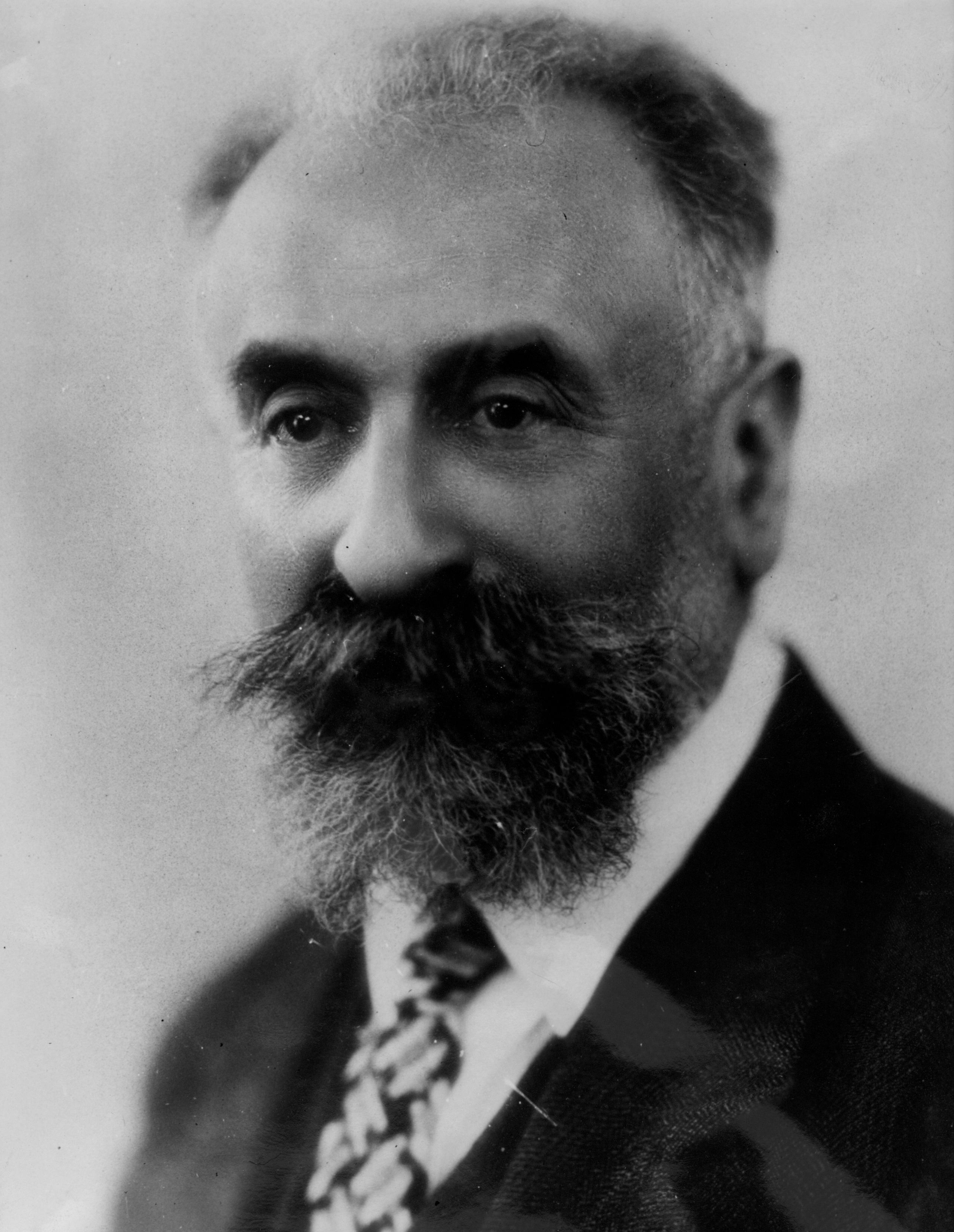
Marcel Mauss (1872-1950) stands as a titan in French sociology and anthropology, often hailed as the 'father of French ethnology.' A nephew of Émile Durkheim…
Contents
Overview
Marcel Mauss was born in Épinal, France. He emerged from a rich intellectual lineage, being the nephew of the towering sociologist Émile Durkheim. His early academic life was steeped in Durkheim's positivist approach to social phenomena, leading him to study philosophy and religion at the University of Bordeaux. While Durkheim focused on the division of labor and social facts, Mauss expanded the scope, venturing into the ethnographic study of non-Western societies. His initial academic career was marked by his involvement in Durkheim's journal, the 'Année Sociologique,' which became a crucial hub for developing French sociology and anthropology. The outbreak of World War I profoundly impacted Mauss, leading to a period of intense reflection and a shift in his focus towards the study of war, patriotism, and the human condition, culminating in his later work on the spiritual and the sacred.
⚙️ How It Works
Mauss's analytical framework, particularly evident in 'The Gift,' operates on the principle that seemingly altruistic acts of giving are deeply embedded in complex systems of social obligation, reciprocity, and status. He argued that the 'total social fact'—an event or phenomenon that engages an entire society—reveals the underlying structures of social life. In 'The Gift,' he meticulously examined ethnographic data from various cultures, such as the potlatch ceremonies of the Indigenous peoples of the Pacific Northwest and the Kula ring exchange system of the Trobriand Islanders, to demonstrate that gifts are never truly free. Instead, they create enduring bonds of 'filiation' and 'obligation' between giver and receiver, involving the spirit of the object itself, which he termed the 'hau.' This concept of a total prestation, encompassing economic, religious, and social dimensions, became central to his method.
📊 Key Facts & Numbers
Marcel Mauss's academic career spanned over five decades, during which he held significant positions at institutions like the Collège de France and the École pratique des hautes études. He was instrumental in establishing ethnology as a distinct academic discipline in France, influencing generations of scholars. His seminal work, 'The Gift,' has seen over 100 editions and translations into more than 30 languages, underscoring its global reach and enduring relevance. By 1950, the year of his death, Mauss had published approximately 250 works, contributing significantly to fields ranging from sociology and anthropology to religious studies and political science. His intellectual output was so vast that it required extensive posthumous compilation and publication, with key essays collected in volumes like 'Sociology and Anthropology' (1950).
👥 Key People & Organizations
Beyond his intellectual kinship with his uncle Émile Durkheim, Marcel Mauss's most significant professional relationships were with his students and colleagues who would go on to shape 20th-century social sciences. Claude Lévi-Strauss, arguably his most famous protégé, directly credited Mauss with inspiring his structuralist approach to anthropology, particularly in his work on kinship and myth. Other key figures who benefited from Mauss's mentorship and intellectual milieu include Henri Hubert, with whom he co-authored 'Sacrifice: Its Nature and Function,' and Georges Dumézil, a noted Indo-Europeanist. Mauss also maintained connections with the broader intellectual currents of his time, engaging with thinkers associated with the Annales School of history and contributing to the development of the Musée de l'Homme (Museum of Man) in Paris, a vital center for ethnographic research.
🌍 Cultural Impact & Influence
The influence of Marcel Mauss's work, particularly 'The Gift,' is profound and far-reaching, extending well beyond academic anthropology. His insights into the social construction of reciprocity and obligation have informed fields as diverse as economics, political science, and sociology. The concept of the 'total social fact' provided a powerful lens for understanding how economic transactions are interwoven with social status, religious beliefs, and political power. His analyses of magic and sacrifice offered nuanced perspectives on non-Western belief systems, challenging ethnocentric biases and promoting a more relativistic understanding of cultural practices. Furthermore, Mauss's emphasis on the spiritual and the sacred in social life continues to resonate in contemporary discussions about identity, community, and the enduring human need for connection and meaning, influencing scholars from Pierre Bourdieu to Marcel Gauchet.
⚡ Current State & Latest Developments
In the contemporary academic landscape, Marcel Mauss's theories remain vibrant and actively debated. 'The Gift' continues to be a cornerstone text in anthropology and sociology courses worldwide, with new generations of scholars reinterpreting its findings in light of evolving social and economic conditions. Recent scholarship has explored the applicability of Mauss's gift economy concepts to digital platforms and the sharing economy, examining how online communities and the exchange of digital goods create new forms of social obligation and reciprocity. His work on the 'spiritual' and the 'soul' is also experiencing a resurgence, prompting renewed interest in his less-discussed writings on religion and magic, and their continued relevance for understanding contemporary spiritualities and secularization debates.
🤔 Controversies & Debates
One of the primary controversies surrounding Marcel Mauss's work, particularly 'The Gift,' centers on the interpretation of his core concepts. Critics have debated whether his emphasis on obligation and reciprocity inadvertently overlooks genuine altruism or whether his ethnographic examples are sometimes selectively interpreted to fit his theoretical framework. Some scholars, like Marshall Sahlins, have challenged Mauss's portrayal of 'primitive' economies as solely driven by obligation, suggesting that elements of voluntarism and individual agency were also present. Furthermore, his later writings on nationalism and the spiritual, especially those influenced by his wartime experiences, have been subject to scrutiny regarding their potential for nationalist sentiment, a point of tension given his Jewish heritage and the rise of antisemitism in Europe. The very definition of a 'total social fact' has also been a point of contention, with some arguing it is too encompassing to be analytically useful.
🔮 Future Outlook & Predictions
The future outlook for Marcel Mauss's intellectual legacy appears robust, particularly as global societies grapple with issues of inequality, social fragmentation, and the ethics of exchange. His framework for understanding gift economies offers critical insights into alternative economic models and the potential for fostering greater social solidarity in an era of increasing commodification. Scholars are likely to continue exploring the relevance of his work to emerging phenomena, such as the rise of cryptocurrency, the ethics of data sharing, and the global challenges of climate change, where collective action and reciprocal responsibility are paramount. His nuanced understanding of the spiritual dimension of social life also positions his work as a valuable resource for understanding contemporary religious and secular belief systems, and the enduring human search for meaning.
💡 Practical Applications
Marcel Mauss's theories have significant practical applications, extending far beyond the academic ivory tower. His analysis of gift exchange provides a foundational understanding for fields like marketing and public relations, illustrating how perceived generosity and reciprocity can build brand loyalty and foster positive consumer relationships. In international relations and diplomacy, his work sheds light on the complex dynamics of aid, trade, and cultural exchange, highlighting the underlying social obligations that often accompany material transfers. Furthermore, his insights into social solidarity and collective identity are invaluable for urban planning and community development initiatives, informing strategies for building cohesive and resilient societies. Even in e
Key Facts
- Category
- culture
- Type
- topic