New York City Culture | Vibepedia
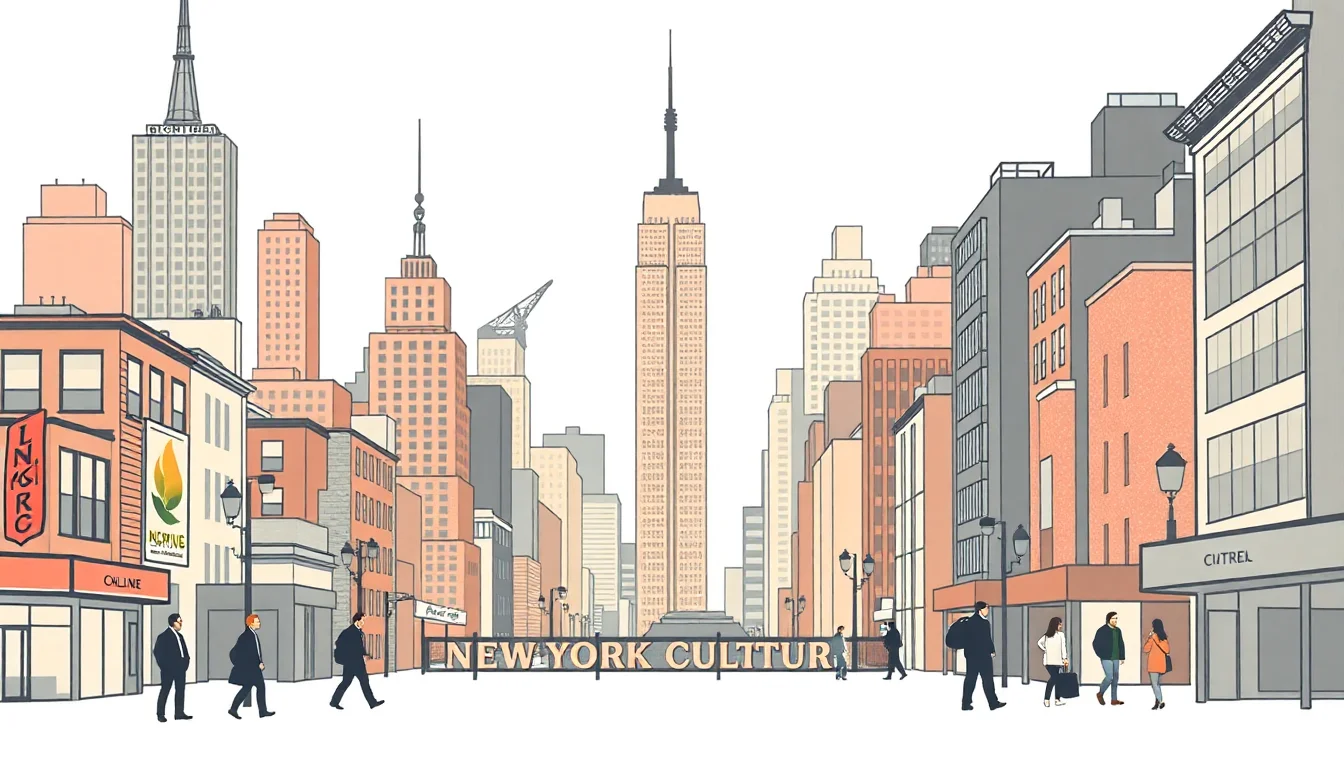
New York City's identity is forged in the crucible of extreme linguistic diversity. This heterogeneity has been the bedrock for countless American cultural…
Contents
Overview
The cultural tapestry of New York City is not a singular weave but a complex, interwoven fabric stretching back centuries, shaped by waves of immigration and the relentless pursuit of artistic and social innovation. Early Dutch settlers laid the groundwork, but it was the 19th and 20th centuries that truly cemented NYC's status as a cultural powerhouse. The influx of Irish immigrants fleeing famine, followed by massive waves of Eastern European Jews and Italians, fundamentally altered the city's social and artistic landscape. The Harlem Renaissance in the 1920s and 30s, a flourishing of Black intellectual and artistic life, produced icons like Langston Hughes and Zora Neale Hurston. Post-World War II saw the rise of Abstract Expressionism, with artists like Jackson Pollock and Mark Rothko making the city the epicenter of the art world. The 1960s and 70s witnessed the birth of punk rock, the Beat Generation's literary legacy, and the pivotal Stonewall Uprising which galvanized the LGBTQ+ rights movement.
⚙️ How It Works
NYC's culture functions as a dynamic ecosystem where diverse elements constantly collide and coalesce, creating new forms and expressions. The city's unparalleled linguistic diversity acts as a constant source of cross-pollination, influencing everything from cuisine to music and slang. Its dense urban environment fosters intense creative communities, from the theater district of Broadway to the independent art galleries of Chelsea and the burgeoning tech scene in Silicon Alley. The city's public spaces, like Central Park and Times Square, serve as stages for spontaneous performances, protests, and cultural exchanges. Furthermore, the sheer concentration of institutions—museums like the Metropolitan Museum of Art, performance venues like Lincoln Center, and universities like Columbia University—provides fertile ground for artistic development and dissemination.
📊 Key Facts & Numbers
New York City is a statistical titan in the cultural arena. It boasts an estimated 20,000 artists and more than 3,000 non-profit arts organizations. Broadway alone generates over $1.5 billion in annual revenue, with its 41 theaters hosting millions of attendees each year. NYC's museums attract over 60 million visitors annually, with the Metropolitan Museum of Art alone housing over 5 million objects.
👥 Key People & Organizations
The cultural landscape of New York City has been shaped by an extraordinary array of individuals and institutions. Visionaries like Robert Moses, though controversial, profoundly impacted the city's physical and cultural infrastructure through his ambitious public works projects. Artistic titans such as Andy Warhol defined the Pop Art movement from his The Factory studio, while J.D. Salinger captured the city's post-war angst in his literature. Musical innovators like Duke Ellington and Charlie Parker defined jazz in Harlem and Greenwich Village, respectively. The Stonewall Uprising was catalyzed by activists like Marsha P. Johnson and Sylvia Rivera. Major cultural institutions like the Lincoln Center for the Performing Arts, the Museum of Modern Art (MoMA), and the Metropolitan Museum of Art are cornerstones of the city's cultural identity, alongside grassroots organizations that nurture emerging talent.
🌍 Cultural Impact & Influence
New York City's cultural output has rippled outward, influencing global trends in art, music, fashion, and social movements. The birth of hip hop in the Bronx, pioneered by DJs like DJ Kool Herc and Afrika Bambaataa, has become a dominant global musical force. The city's role as the birthplace of punk rock in the 1970s, championed by bands like the Ramones and Television, redefined rock music. Broadway musicals, such as Hamilton and West Side Story, are produced and imitated worldwide, setting standards for musical theater. The city's fashion scene, from the avant-garde designs showcased during New York Fashion Week to the street style captured in publications like The Cut, dictates global trends. Moreover, NYC's history as a sanctuary for immigrants and marginalized communities has inspired movements for civil rights and social justice across the globe.
⚡ Current State & Latest Developments
In the present day, New York City's culture continues its dynamic evolution, grappling with contemporary challenges and embracing new forms of expression. Broadway theaters are reopening post-pandemic, and a vibrant off-Broadway scene is pushing creative boundaries. The visual arts scene is as active as ever, with galleries in Chelsea, the Lower East Side, and Brooklyn showcasing both established and emerging artists. Platforms like TikTok and Instagram are becoming crucial for artists to reach audiences, often originating trends that go viral globally. The city's culinary scene, a microcosm of its diversity, continues to innovate, with new restaurants and food trends emerging weekly. However, the rising cost of living and the impact of gentrification pose significant challenges to artists and cultural institutions, forcing adaptation and relocation.
🤔 Controversies & Debates
The cultural narrative of New York City is rife with contention. A persistent debate surrounds the impact of gentrification and rising rents on artistic communities, with critics arguing that the city is pricing out the very creators who define its cultural vibrancy. The commercialization of art, particularly on Broadway and in major galleries, is another point of friction, with some lamenting the loss of avant-garde experimentation in favor of market-driven productions. The representation of diverse voices within mainstream cultural institutions is also a subject of ongoing scrutiny; while progress has been made since the days of the Harlem Renaissance, disparities persist. Furthermore, the city's role as a global cultural exporter is sometimes viewed critically, with accusations that it homogenizes or appropriates cultural forms from elsewhere without proper attribution or benefit to the originators.
🔮 Future Outlook & Predictions
The future of New York City's culture appears poised for continued reinvention, driven by technological advancements and evolving societal values. Expect further integration of digital and physical experiences, with augmented reality and virtual reality playing larger roles in art installations, theater, and museum exhibits. The city's role as a global cultural influencer will likely persist, though perhaps with a greater emphasis on decentralized, community-led initiatives rather than solely top-down institutional output. The challenges of affordability will undoubtedly continue to shape the cultural landscape, potentially leading to more distributed creative hubs across the outer boroughs and a greater reliance on digital platforms for dissemination. Furthermore, as the city diversifies, expect new cultural fusions and artistic expressions to emerge from the ongoing interplay of its vast immigrant populations and established communities.
💡 Practical Applications
New York City's culture isn't just for consumption; it's a living laboratory with tangible applications. The city's theatrical innovations on Broadway serve as a model for performing arts centers worldwide, influencing everything from stage design to narrative structure. The experimental art scenes in neighborhoods like Bushwick, Brooklyn, provide fertile ground for new artisti
Key Facts
- Category
- culture
- Type
- topic