Nicholas Tesla: The Visionary Inventor | Vibepedia
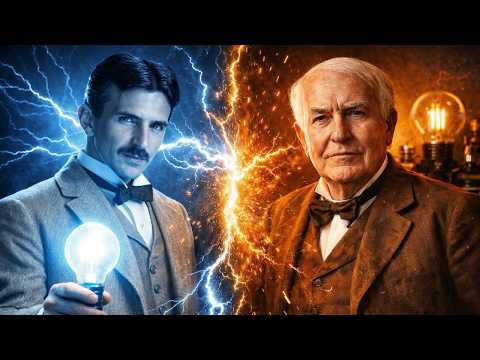
Nicholas Tesla, born on July 10, 1856, in Smiljan, Croatia, was a pioneering inventor, electrical engineer, and futurist who transformed the world with his…
Contents
- 🔌 Introduction to Nicholas Tesla
- 💡 Early Life and Education
- 📚 Theoretical Foundations
- 💻 Tesla's Work with Alternating Current
- 🔋 The War of the Currents
- 🌐 Tesla's Vision for Wireless Energy
- 📡 Radio Communication and the Tesla Coil
- 🚀 Later Life and Legacy
- 🤝 Collaborations and Influences
- 📊 Patents and Inventions
- 🔮 Controversies and Criticisms
- Frequently Asked Questions
- Related Topics
Overview
Nicholas Tesla, born on July 10, 1856, in Smiljan, Croatia, was a pioneering inventor, electrical engineer, and futurist who transformed the world with his groundbreaking ideas. With over 300 patents to his name, Tesla's work on alternating current (AC) systems revolutionized the way electricity is transmitted and used. His most notable contributions include the development of the AC motor, the Tesla coil, and the transmission of electrical energy wirelessly over long distances. Tesla's work was often at odds with that of his contemporaries, including Thomas Edison, with whom he had a famous 'War of Currents.' Despite facing numerous challenges and setbacks, Tesla remained a prolific inventor until his death on January 7, 1943, leaving behind a legacy that continues to inspire innovation and discovery. Today, Tesla's ideas and inventions remain at the forefront of modern technology, from electric vehicles to renewable energy systems. As we look to the future, Tesla's vision of a world powered by clean, sustainable energy is more relevant than ever, with companies like Tesla, Inc. and others working to make his dreams a reality.
🔌 Introduction to Nicholas Tesla
Nicholas Tesla was a visionary inventor and engineer who made groundbreaking contributions to the development of electrical power systems. Born on July 10, 1856, in Smiljan, Croatia, Tesla's fascination with science and technology began at an early age. He is best known for his work on Alternating Current (AC) systems, which revolutionized the way electricity is transmitted and used. Tesla's work was heavily influenced by the ideas of James Clerk Maxwell and Heinrich Hertz. As a pioneer in the field of electrical engineering, Tesla's legacy continues to inspire new generations of inventors and engineers, including Elon Musk and his work on Tesla, Inc..
💡 Early Life and Education
Tesla's early life and education played a significant role in shaping his future as an inventor. He grew up in a family of Serbian descent and was the fourth of five children. Tesla's interest in science and technology was encouraged by his father, Rev. Milutin Tesla, who was a priest and a writer. Tesla's education began at home, where he was taught by his parents and private tutors. He later attended the Technical University of Graz in Austria, where he studied electrical engineering and physics. Tesla's time at the university was marked by his fascination with the works of James Watt and Michael Faraday. During his studies, Tesla also developed a strong interest in the principles of Electromagnetism and Electricity.
📚 Theoretical Foundations
Tesla's theoretical foundations were laid during his time at the Technical University of Graz. He was heavily influenced by the ideas of James Clerk Maxwell and his work on electromagnetism. Tesla's understanding of Maxwell's equations and the principles of electromagnetic induction helped him develop his own theories on the nature of electricity. Tesla's work was also influenced by the ideas of Heinrich Hertz, who had demonstrated the existence of electromagnetic waves. Tesla's theoretical foundations were further developed during his time working for Continental Edison in Paris, where he was exposed to the latest developments in electrical engineering. Tesla's work on Direct Current (DC) systems and his experiments with Alternating Current (AC) systems laid the groundwork for his future inventions.
💻 Tesla's Work with Alternating Current
Tesla's work with alternating current (AC) systems was a major breakthrough in the development of electrical power systems. In the late 1880s, Tesla began experimenting with AC systems, which he believed had the potential to transmit power more efficiently over long distances. Tesla's work on AC systems was influenced by the ideas of George Westinghouse, who had acquired the rights to Tesla's patents. Tesla's AC system used a polyphase transmission system, which allowed for the efficient transmission of power over long distances. The development of AC systems was a major milestone in the War of the Currents, a period of intense competition between Tesla and Thomas Edison over the future of electrical power distribution. Tesla's work on AC systems was also influenced by the ideas of Oliver Lodge and his work on Electromagnetic Induction.
🔋 The War of the Currents
The War of the Currents was a period of intense competition between Tesla and Thomas Edison over the future of electrical power distribution. Edison was a proponent of direct current (DC) systems, which he believed were safer and more efficient. Tesla, on the other hand, believed that AC systems were the future of electrical power distribution. The War of the Currents was marked by a series of public demonstrations and experiments, with each side trying to outdo the other. Tesla's AC system ultimately emerged as the winner, with the first commercial AC power station being opened in Great Barrington, Massachusetts in 1886. The War of the Currents was a significant milestone in the development of electrical power systems and marked the beginning of the end of the DC era. Tesla's work on AC systems was also influenced by the ideas of Charles Steinmetz and his work on Electrical Engineering.
🌐 Tesla's Vision for Wireless Energy
Tesla's vision for wireless energy was a major area of research and development for the inventor. Tesla believed that it was possible to transmit energy wirelessly over long distances without the use of wires. He developed a system of Wireless Communication that used a combination of electromagnetic waves and electrical currents to transmit energy. Tesla's work on wireless energy was influenced by the ideas of Guglielmo Marconi and his work on Radio Communication. Tesla's vision for wireless energy was not limited to the transmission of power, but also included the transmission of information. He believed that it was possible to use wireless energy to transmit messages and even images over long distances. Tesla's work on wireless energy was also influenced by the ideas of Nikola Tesla himself, who had developed a number of patents related to wireless energy transmission.
📡 Radio Communication and the Tesla Coil
Tesla's work on radio communication and the Tesla coil was a major area of research and development for the inventor. The Tesla coil is a type of resonant transformer that produces high-voltage, low-current electricity. Tesla used the Tesla coil to demonstrate the principles of electromagnetic induction and to transmit energy wirelessly over short distances. Tesla's work on radio communication was influenced by the ideas of Guglielmo Marconi and his work on Radio Communication. Tesla's vision for radio communication was not limited to the transmission of messages, but also included the transmission of energy. He believed that it was possible to use radio waves to transmit power over long distances. Tesla's work on the Tesla coil was also influenced by the ideas of James Clerk Maxwell and his work on Electromagnetism.
🚀 Later Life and Legacy
Tesla's later life and legacy are a testament to his enduring impact on the world of science and technology. Despite his many achievements, Tesla struggled with financial difficulties and personal problems throughout his life. He died on January 7, 1943, at the age of 86, in New York City. Tesla's legacy continues to inspire new generations of inventors and engineers, and his work on AC systems and wireless energy remains a major area of research and development. Tesla's work has also had a significant impact on popular culture, with references to the inventor appearing in films, literature, and music. Tesla's legacy is a reminder of the power of human ingenuity and the importance of pursuing one's passions, as seen in the work of Elon Musk and his company Tesla, Inc..
🤝 Collaborations and Influences
Tesla's collaborations and influences were a major factor in his success as an inventor. He worked with a number of prominent scientists and engineers, including George Westinghouse and Oliver Lodge. Tesla's work was also influenced by the ideas of James Clerk Maxwell and Heinrich Hertz. Tesla's collaborations with Westinghouse were particularly significant, as they led to the development of the first commercial AC power station. Tesla's work with Lodge was also important, as it helped to establish the principles of electromagnetic induction. Tesla's collaborations and influences demonstrate the importance of networking and collaboration in the scientific community, as seen in the work of Nikola Tesla and his contemporaries.
📊 Patents and Inventions
Tesla's patents and inventions are a testament to his creativity and ingenuity as an inventor. He held over 300 patents in his name, including patents for the AC motor, the Tesla coil, and the wireless transmission of energy. Tesla's patents and inventions have had a significant impact on the development of modern technology, and his work continues to inspire new generations of inventors and engineers. Tesla's most famous patent is probably his patent for the AC motor, which was granted in 1888. This patent was a major milestone in the development of AC systems and paved the way for the widespread adoption of AC power. Tesla's work on the Tesla coil was also significant, as it demonstrated the principles of electromagnetic induction and paved the way for the development of radio communication. Tesla's patents and inventions are a reminder of the importance of protecting intellectual property and the need for inventors to be recognized for their contributions to society.
🔮 Controversies and Criticisms
Tesla's controversies and criticisms are a reminder that even the most brilliant inventors can be flawed and imperfect. Tesla was known to be eccentric and reclusive, and his personal life was marked by a number of controversies and criticisms. Tesla's feud with Thomas Edison was particularly notable, as it marked a major turning point in the development of electrical power systems. Tesla's work on AC systems was also criticized by some, who believed that it was too complex and too expensive to be practical. Despite these criticisms, Tesla's work on AC systems ultimately emerged as the winner, and his legacy continues to inspire new generations of inventors and engineers. Tesla's controversies and criticisms are a reminder that even the most brilliant inventors can be flawed and imperfect, and that the pursuit of scientific knowledge and technological innovation is often marked by controversy and debate.
Key Facts
- Year
- 1943
- Origin
- Smiljan, Croatia
- Category
- Biography, Science, Technology
- Type
- Person
Frequently Asked Questions
What was Tesla's most famous invention?
Tesla's most famous invention is probably the AC motor, which was granted a patent in 1888. This invention was a major milestone in the development of AC systems and paved the way for the widespread adoption of AC power. Tesla's work on the AC motor was influenced by the ideas of James Clerk Maxwell and his work on Electromagnetism.
What was the War of the Currents?
The War of the Currents was a period of intense competition between Tesla and Thomas Edison over the future of electrical power distribution. Edison was a proponent of direct current (DC) systems, while Tesla believed that AC systems were the future of electrical power distribution. The War of the Currents was marked by a series of public demonstrations and experiments, with each side trying to outdo the other. Tesla's AC system ultimately emerged as the winner, with the first commercial AC power station being opened in Great Barrington, Massachusetts in 1886.
What was Tesla's vision for wireless energy?
Tesla's vision for wireless energy was a major area of research and development for the inventor. He believed that it was possible to transmit energy wirelessly over long distances without the use of wires. Tesla developed a system of Wireless Communication that used a combination of electromagnetic waves and electrical currents to transmit energy. Tesla's work on wireless energy was influenced by the ideas of Guglielmo Marconi and his work on Radio Communication.
What was the Tesla coil?
The Tesla coil is a type of resonant transformer that produces high-voltage, low-current electricity. Tesla used the Tesla coil to demonstrate the principles of electromagnetic induction and to transmit energy wirelessly over short distances. The Tesla coil is still used today in a variety of applications, including Radio Communication and Medical Imaging.
What was Tesla's legacy?
Tesla's legacy is a testament to his enduring impact on the world of science and technology. Despite his many achievements, Tesla struggled with financial difficulties and personal problems throughout his life. However, his work on AC systems and wireless energy remains a major area of research and development, and his legacy continues to inspire new generations of inventors and engineers. Tesla's work has also had a significant impact on popular culture, with references to the inventor appearing in films, literature, and music.
How did Tesla's work influence modern technology?
Tesla's work on AC systems and wireless energy has had a significant impact on the development of modern technology. His work on the AC motor paved the way for the widespread adoption of AC power, which is still used today in homes and businesses around the world. Tesla's work on wireless energy has also influenced the development of modern technologies such as Radio Communication and Wireless Power Transmission.
What were some of Tesla's most notable collaborations?
Tesla's collaborations with George Westinghouse and Oliver Lodge were particularly significant. Westinghouse acquired the rights to Tesla's patents and helped to develop the first commercial AC power station. Lodge's work on electromagnetic induction helped to establish the principles of AC systems. Tesla's collaborations with these inventors and engineers demonstrate the importance of networking and collaboration in the scientific community.