Quantum Dot | Vibepedia
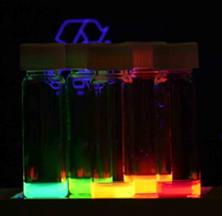
Quantum dots (QDs) or semiconductor nanocrystals are tiny particles, exhibiting distinct optical and electronic properties due to quantum mechanical effects…
Contents
- 🎵 Origins & History
- ⚙️ How It Works
- 📊 Key Facts & Numbers
- 👥 Key People & Organizations
- 🌍 Cultural Impact & Influence
- ⚡ Current State & Latest Developments
- 🤔 Controversies & Debates
- 🔮 Future Outlook & Predictions
- 💡 Practical Applications
- 📚 Related Topics & Deeper Reading
- Frequently Asked Questions
- References
- Related Topics
Overview
Quantum dots (QDs) or semiconductor nanocrystals are tiny particles, exhibiting distinct optical and electronic properties due to quantum mechanical effects. They are a crucial area of research in nanotechnology and materials science, with applications in fields like optoelectronics. Quantum dots have a high surface-to-volume ratio, which makes them highly reactive and sensitive to their environment. Quantum dots can be made from a variety of materials, including cadmium selenide, lead sulfide, and silicon. Researchers are exploring new applications of quantum dots in various fields.
🎵 Origins & History
The history of quantum dots is closely tied to the development of nanotechnology and materials science. Researchers like Louis Brus and Moungi Bawendi have made significant contributions to the understanding of quantum dot properties.
⚙️ How It Works
Quantum dots work by confining electrons in a small space, leading to discrete energy levels and tunable light emission. This process is known as photoluminescence, where an electron in the quantum dot is excited by UV light and then drops back into the valence band, releasing its energy as light. Quantum dots are being used in displays to achieve better color accuracy and efficiency.
📊 Key Facts & Numbers
Some key facts about quantum dots include their high surface-to-volume ratio, which makes them highly reactive and sensitive to their environment. Quantum dots can be made from a variety of materials, including cadmium selenide, lead sulfide, and silicon. Quantum dots are being used in consumer electronics, such as TVs and smartphones, to achieve better color accuracy and efficiency.
👥 Key People & Organizations
Key people in the field of quantum dots include Louis Brus, a professor at Columbia University who has made significant contributions to the understanding of quantum dot properties. Other notable researchers include Moungi Bawendi, a professor at MIT who has developed new methods for synthesizing quantum dots.
🌍 Cultural Impact & Influence
The cultural impact of quantum dots is significant, with potential applications in fields like art, design, and entertainment. Quantum dots are being used to create interactive and immersive exhibits. Quantum dots have potential applications in fields like art, design, and entertainment.
⚡ Current State & Latest Developments
Researchers are exploring new applications of quantum dots in various fields. Quantum dots are being used to label and track cells in the body. Quantum dots are closely related to other nano-scale materials, such as nanoparticles and nanowires.
🤔 Controversies & Debates
Despite the many potential benefits of quantum dots, there are also some controversies and debates surrounding their use. Researchers are working to develop more sustainable and environmentally-friendly methods for synthesizing quantum dots.
🔮 Future Outlook & Predictions
Looking to the future, the outlook for quantum dots is highly promising, with potential applications in a wide range of fields. Quantum dots could be used to develop new medical imaging technologies.
💡 Practical Applications
Practical applications of quantum dots are already being explored in a variety of fields, including optoelectronics. Quantum dots are being used in biomedical imaging, where they can be used to label and track cells in the body.
Key Facts
- Category
- science
- Type
- concept
Frequently Asked Questions
What is a quantum dot?
A quantum dot is a tiny semiconductor particle with unique optical and electronic properties due to quantum mechanical effects. They have a high surface-to-volume ratio, which makes them highly reactive and sensitive to their environment. Quantum dots can be made from a variety of materials, including cadmium selenide, lead sulfide, and silicon.
How do quantum dots work?
Quantum dots work by confining electrons in a small space, leading to discrete energy levels and tunable light emission. This process is known as photoluminescence, where an electron in the quantum dot is excited by UV light and then drops back into the valence band, releasing its energy as light.