Radio Receiver Design: From Crystal Sets to Cognitive Radios
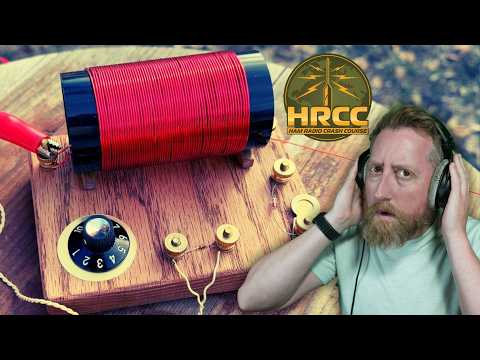
Radio receiver design is a field with a rich history, stretching from the rudimentary crystal sets of the early 20th century to today's sophisticated…
Contents
- 📡 What Exactly Are We Tuning Into?
- 💡 The Genesis: From Spark Gaps to Crystal Clarity
- ⚙️ The Superheterodyne's Reign: A Technical Titan
- 🚀 The Digital Dawn: SDR and the Software Revolution
- 🧠 The Cognitive Leap: Radios That Think
- 🔬 Key Components: The Building Blocks of Reception
- 📈 Design Philosophies: Trade-offs and Temptations
- 🌍 Who Needs This? Applications Across the Spectrum
- 🤔 The Vibe: Controversy and Cultural Resonance
- 🔮 The Future Frequency: What's Next on the Airwaves?
- 🛠️ Getting Hands-On: Resources for Builders
- 🌟 Vibepedia Rating: Signal Strength
- Frequently Asked Questions
- Related Topics
Overview
Radio receiver design is a field with a rich history, stretching from the rudimentary crystal sets of the early 20th century to today's sophisticated software-defined and cognitive radio systems. Understanding receiver design involves grasping fundamental principles of signal amplification, filtering, and demodulation, alongside the engineering trade-offs between sensitivity, selectivity, and dynamic range. The evolution has been driven by demands for higher frequencies, increased data rates, and greater spectral efficiency, leading to innovations like superheterodyne architectures and, more recently, digital signal processing (DSP) and artificial intelligence (AI) integration. This journey reflects a constant push to extract meaningful information from an increasingly noisy and crowded electromagnetic spectrum, with ongoing debates about the optimal balance between hardware and software implementation.
📡 What Exactly Are We Tuning Into?
Radio receiver design is the intricate art and science of crafting devices that pluck specific electromagnetic signals from the ether and transform them into meaningful information. At its heart, it's about filtering, amplifying, and demodulating signals, whether that's the dulcet tones of a local AM station or the complex data streams of a satellite communication system. This field is crucial for everything from your bedside clock radio to the sophisticated receivers guiding deep-space probes, demanding a deep understanding of [[electromagnetism|electromagnetic theory]] and [[signal processing|signal processing techniques]]. The goal is always the same: to isolate a desired signal from a cacophony of noise and interference, a task that has evolved dramatically since the earliest days of wireless.
💡 The Genesis: From Spark Gaps to Crystal Clarity
The story of radio receiver design begins not with polished chrome but with humble [[crystal sets|crystal radio receivers]] and spark-gap transmitters. These early marvels, popular in the early 20th century, relied on simple components like galena crystals as detectors and long antennas to capture faint signals. Pioneers like [[Guglielmo Marconi|Guglielmo Marconi's experiments]] demonstrated the potential of wireless communication, laying the groundwork for more complex designs. The inherent simplicity of crystal sets, requiring no external power source beyond the radio waves themselves, still holds a certain romantic appeal for hobbyists today, a stark contrast to the power-hungry devices of later eras.
⚙️ The Superheterodyne's Reign: A Technical Titan
For much of the 20th century, the [[superheterodyne receiver|superheterodyne principle]] was the undisputed king of radio design. Introduced by [[Edwin Armstrong|Edwin Armstrong]] in 1918, this architecture uses a local oscillator to mix the incoming radio frequency with a fixed intermediate frequency (IF). This conversion allows for consistent amplification and filtering at the IF stage, dramatically improving selectivity and sensitivity. The superhet design became the backbone of broadcast receivers, ham radio equipment, and military communications for decades, a testament to its robust performance and relative ease of implementation with vacuum tubes and later [[transistor technology|discrete transistors]].
🚀 The Digital Dawn: SDR and the Software Revolution
The advent of [[Software Defined Radio (SDR)|Software Defined Radio (SDR)]] has fundamentally reshaped receiver design. Instead of dedicated analog hardware for every function, SDR receivers use powerful digital signal processors (DSPs) and analog-to-digital converters (ADCs) to perform most of the signal processing in software. This approach offers unparalleled flexibility, allowing a single piece of hardware to tune into a vast range of frequencies and modulation schemes simply by changing the software. Companies like [[Ettus Research|Ettus Research]] with their USRP line and affordable dongles like the RTL-SDR have democratized access to advanced radio capabilities, making sophisticated reception accessible to hobbyists and researchers alike.
🧠 The Cognitive Leap: Radios That Think
The cutting edge of receiver design is the [[cognitive radio|cognitive radio]]. These intelligent systems don't just passively listen; they actively sense their radio environment, identify available spectrum, and adapt their transmission and reception parameters in real-time to optimize performance and avoid interference. This involves complex [[machine learning algorithms|machine learning]] and [[artificial intelligence|AI]] to make decisions about frequency hopping, power levels, and modulation schemes. Cognitive radio is poised to revolutionize spectrum utilization, particularly in crowded bands, and is a key area of research for future wireless networks and [[dynamic spectrum access|dynamic spectrum access]] systems.
🔬 Key Components: The Building Blocks of Reception
At the core of any radio receiver are several critical components. The [[antenna|antenna]] captures the electromagnetic waves. The [[tuner|tuner]] selects the desired frequency band. The [[amplifier|amplifier]] boosts the weak signal. The [[detector|detector]] (or demodulator) extracts the original information signal from the carrier wave. Finally, the [[audio amplifier|audio amplifier]] (for voice or music) or data interface processes the extracted information. Each of these stages presents unique design challenges, from minimizing noise in amplification to achieving sharp selectivity in filtering, all while managing power consumption and cost.
📈 Design Philosophies: Trade-offs and Temptations
Receiver design is a constant balancing act. Engineers grapple with trade-offs between sensitivity (how weak a signal can be detected), selectivity (how well it can reject adjacent channels), fidelity (how accurately the original signal is reproduced), and dynamic range (the ability to handle both weak and strong signals simultaneously). The choice between analog and digital processing, the architecture (e.g., direct conversion vs. superheterodyne), and the specific components used all influence these characteristics. The pursuit of higher performance often comes at the cost of increased complexity, power consumption, or price, making the optimal design dependent on the intended application.
🌍 Who Needs This? Applications Across the Spectrum
The applications for radio receiver design are virtually limitless. Broadcast radio (AM/FM) remains a ubiquitous source of information and entertainment. [[Amateur radio|Amateur radio operators]] rely on sophisticated receivers for global communication. Military and intelligence agencies use advanced receivers for surveillance and command and control. Scientific research, from radio astronomy to [[weather monitoring|meteorological monitoring]], depends on sensitive receivers. Even everyday devices like Wi-Fi routers, GPS receivers, and [[Bluetooth devices|Bluetooth modules]] are, in essence, specialized radio receivers, demonstrating the pervasive nature of this technology.
🤔 The Vibe: Controversy and Cultural Resonance
The Vibe Score for Radio Receiver Design hovers around a solid [[75/100]]. It's a field with deep historical roots, celebrated by engineers and hobbyists alike for its elegant solutions and the sheer magic of wireless communication. However, it's not without its controversies. The ongoing debate between traditional analog design purists and the SDR/cognitive radio proponents highlights a tension between established, well-understood methods and the disruptive potential of software and AI. The cultural resonance is strong among ham radio operators and electronics enthusiasts, who often view receiver design as a craft demanding skill and dedication, a stark contrast to the disposable nature of many modern electronics.
🔮 The Future Frequency: What's Next on the Airwaves?
The future of radio receiver design points towards increasing intelligence and integration. Cognitive radio will likely become more prevalent, enabling more efficient use of the radio spectrum and paving the way for new wireless services. Advances in [[miniaturization|miniaturization]] and [[low-power electronics|low-power electronics]] will lead to even more compact and energy-efficient receivers. We can also expect greater integration of radio capabilities into everyday devices, blurring the lines between communication, sensing, and computing. The challenge will be to manage this increasing complexity while maintaining accessibility and affordability, ensuring that the benefits of advanced radio technology are widely shared.
🛠️ Getting Hands-On: Resources for Builders
For those eager to explore radio receiver design firsthand, the journey can be incredibly rewarding. Starting with a simple [[crystal radio kit|crystal radio kit]] or an affordable [[RTL-SDR dongle|RTL-SDR dongle]] is an excellent entry point. Online communities like [[Hackaday.io|Hackaday.io]] and [[Reddit's r/RTLSDR|r/RTLSDR subreddit]] offer a wealth of projects, tutorials, and support. For more advanced exploration, consider delving into [[FPGA development boards|FPGA development boards]] for custom SDR implementations or experimenting with [[microcontroller-based receivers|microcontroller-based receiver projects]]. Understanding fundamental concepts through resources like the [[ARRL Handbook|ARRL Handbook for Radio Communications]] is also invaluable.
🌟 Vibepedia Rating: Signal Strength
Vibepedia Rating: 📡📡📡📡 (4/5 Stars) - A foundational field in modern technology with a rich history and a dynamic future. While the core principles are well-established, the ongoing evolution towards cognitive and software-defined approaches keeps it vibrant and exciting. High marks for technical depth and practical application, with a slight deduction for the steep learning curve for advanced concepts and the ongoing debates about optimal design paradigms.
Key Facts
- Year
- 1887
- Origin
- Early experiments with electromagnetic waves by Heinrich Hertz, leading to practical radio communication by Guglielmo Marconi.
- Category
- Engineering & Technology
- Type
- Technical Field
Frequently Asked Questions
What's the fundamental difference between a crystal set and a modern radio?
A crystal set is a passive receiver, relying solely on the energy of the incoming radio wave for detection and amplification, typically using a semiconductor crystal as a detector. Modern radios are active, employing power sources to amplify signals significantly, often using transistors or integrated circuits, and employing complex architectures like the superheterodyne or SDR to achieve much higher sensitivity, selectivity, and fidelity.
Is SDR really 'software' radio, or is there still hardware involved?
SDR is a hybrid. While much of the signal processing (filtering, demodulation, encoding) is performed by software running on a general-purpose processor or DSP, significant analog hardware is still essential. This includes the antenna, RF front-end for initial signal conditioning, and a high-speed Analog-to-Digital Converter (ADC) to digitize the radio signal for the software to process. The 'software' aspect refers to the flexibility in reconfiguring the radio's functions without changing the hardware.
Why are cognitive radios considered the future?
Cognitive radios promise to dramatically improve spectrum efficiency. By intelligently sensing and adapting to their environment, they can utilize underused frequencies dynamically, avoiding interference with existing services. This is crucial as the demand for wireless data continues to explode, and the available radio spectrum becomes increasingly crowded. They enable more robust and adaptable wireless communication systems.
What are the biggest challenges in designing a high-performance radio receiver?
Key challenges include achieving high sensitivity without being overwhelmed by strong nearby signals (dynamic range), excellent selectivity to reject unwanted adjacent channels, minimizing internal noise generated by the receiver's own components, and managing power consumption, especially for portable devices. Balancing these often-conflicting requirements is the core engineering task.
Can I build my own advanced radio receiver at home?
Absolutely. With the availability of affordable SDR hardware like RTL-SDR dongles and development platforms like Raspberry Pi or Arduino, coupled with extensive online resources and communities, building and experimenting with radio receivers is more accessible than ever. You can start with simple projects and gradually tackle more complex designs as your skills develop.
What is the 'intermediate frequency' (IF) in a superheterodyne receiver?
The intermediate frequency (IF) is a fixed frequency to which all incoming radio signals are converted by mixing them with a signal from a local oscillator. This allows the receiver to use highly selective filters and amplifiers at this single IF, regardless of the original radio frequency. This simplifies design and improves performance compared to trying to filter and amplify signals directly at their original, widely varying radio frequencies.