Royal Opera House | Vibepedia
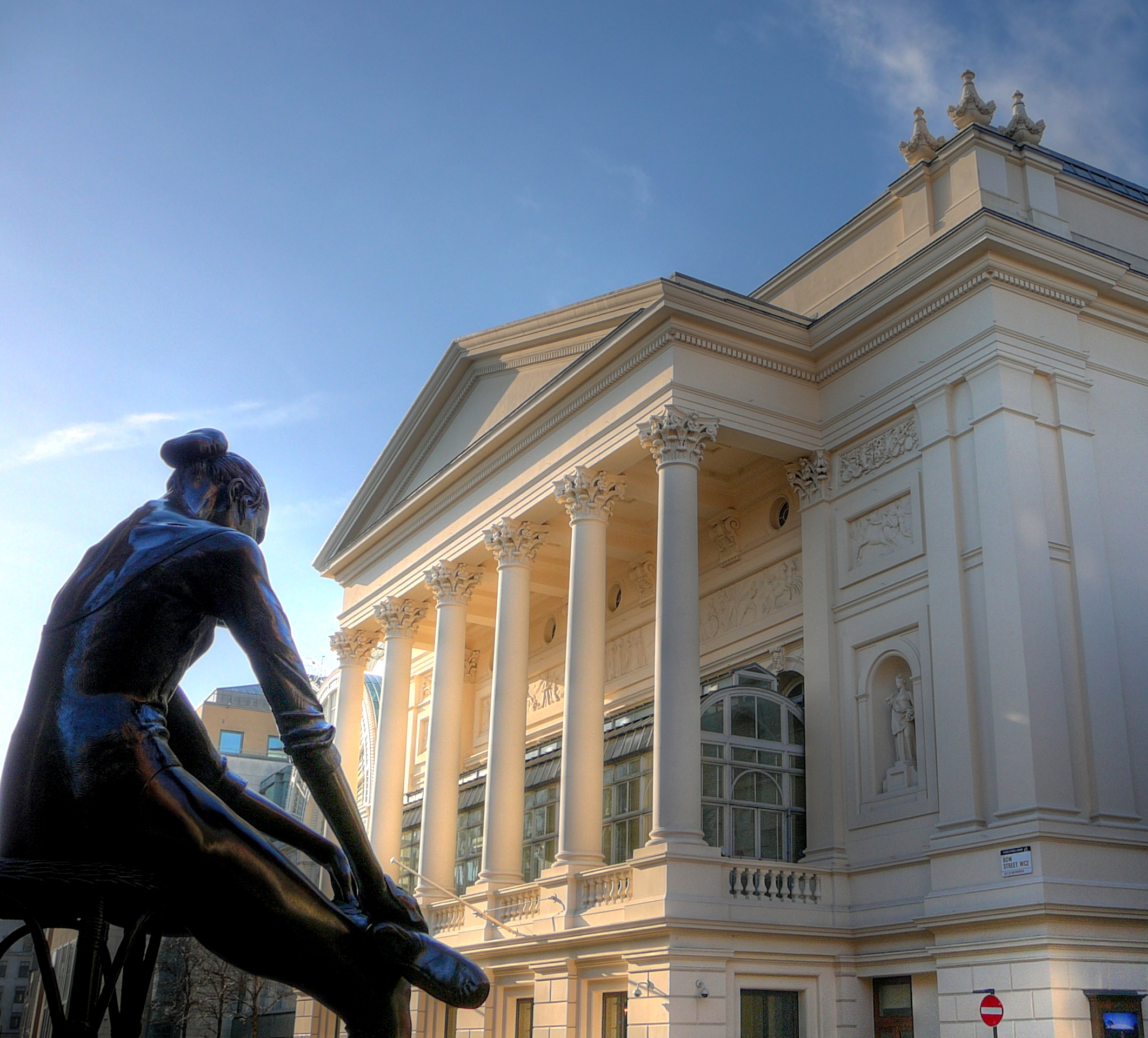
The Royal Opera House (ROH) is a premier performing arts venue located in Covent Garden, London, serving as the official home of The Royal Opera and The Royal…
Contents
- 🎵 Origins & History
- ⚙️ How It Works
- 📊 Key Facts & Numbers
- 👥 Key People & Organizations
- 🌍 Cultural Impact & Influence
- ⚡ Current State & Latest Developments
- 🤔 Controversies & Debates
- 🔮 Future Outlook & Predictions
- 💡 Practical Applications
- 📚 Related Topics & Deeper Reading
- Frequently Asked Questions
- References
- Related Topics
Overview
The Royal Opera House (ROH) is a premier performing arts venue located in Covent Garden, London, serving as the official home of The Royal Opera and The Royal Ballet. Established originally in 1732 as the Theatre Royal, the site has survived two catastrophic fires and three distinct architectural iterations, with the current structure dating back to 1858. It functions as a massive cultural engine, employing over 1,000 staff and hosting upwards of 150 performances annually in its 2,256-seat main auditorium. Beyond its role as a stage for George Frideric Handel and Margot Fonteyn, the ROH is a symbol of the tension between elite tradition and modern accessibility, navigating the complexities of state funding and global digital broadcasting. Today, it remains one of the most technologically advanced theaters in the world following a massive £178 million redevelopment completed in 1999.
🎵 Origins & History
The site's theatrical lineage began in 1732 when actor-manager John Rich opened the Theatre Royal using capital earned from the success of The Beggar's Opera. While initially a playhouse, the venue became a sanctuary for George Frideric Handel, who premiered many of his greatest oratorios and operas there starting in 1735. Disaster struck in 1808 when a fire leveled the building, leading to a second theater designed by Robert Smirke that opened in 1809. This second iteration was also consumed by flames in 1856, paving the way for the current building designed by Edward Middleton Barry. The 1858 structure shifted the focus almost exclusively to opera and ballet, solidifying its status as the 'Royal Italian Opera' before dropping the linguistic distinction in 1892.
⚙️ How It Works
Operating the Royal Opera House requires a sophisticated synchronization of the Orchestra of the Royal Opera House and massive technical departments. The 1990s reconstruction, led by architects Jeremy Dixon and Edward Jones, introduced a revolutionary 'wagon' system that allows entire sets to be moved sideways or backwards, enabling the venue to rotate multiple productions in a single week. The Paul Hamlyn Hall, formerly the Floral Hall, serves as a massive glass-enclosed social space that bridges the historic auditorium with modern amenities. Behind the scenes, the house maintains extensive workshops for costume design, wig-making, and scenic painting, often utilizing CAD to manage the complex logistics of international touring productions.
📊 Key Facts & Numbers
The main auditorium features a horseshoe-shaped seating plan with a capacity of 2,256 people across four tiers and the gallery. In terms of financial scale, the institution historically receives significant annual subsidies from the Arts Council England, which in recent cycles has hovered around £22 million to £24 million. The 1999 renovation cost a staggering £178 million, funded largely by the National Lottery. The stage itself is 12.2 meters wide and 14.8 meters high, supported by a fly tower that reaches 37 meters above the stage floor. Annually, the venue attracts over 700,000 visitors, while its digital reach through YouTube and cinema screenings extends to millions across 50 countries.
👥 Key People & Organizations
The institution is currently led by Chief Executive Alex Beard, who took over from Tony Hall in 2013. Artistic direction is split between Oliver Mears for opera and Kevin O'Hare for ballet, ensuring a balance between classical repertoire and contemporary commissions. Historically, the house was defined by the legendary tenure of Ninette de Valois, who founded the ballet company, and music directors like Sir Georg Solti, who elevated the orchestra to international standards. The Royal Ballet School acts as a primary feeder for the company, maintaining a rigorous pipeline of talent that has produced stars like Darcey Bussell and Carlos Acosta.
🌍 Cultural Impact & Influence
The Royal Opera House exerts a gravitational pull on global high culture, often serving as the benchmark for excellence in the performing arts. It has been immortalized in popular culture, from the climax of Alfred Hitchcock's 'The Man Who Knew Too Much' to its frequent appearances in high-fashion editorials. The 'Live from Covent Garden' broadcasts have democratized access to what was once a strictly aristocratic pastime, influencing how other institutions like the Metropolitan Opera approach digital engagement. Its influence extends to the very fabric of London's urban identity, anchoring the Covent Garden district as a hub for both tourism and elite artistic expression.
⚡ Current State & Latest Developments
In 2024, the institution underwent a significant branding shift, officially adopting the name 'Royal Ballet and Opera' to better reflect the equal status of its two resident companies. This move coincides with a period of financial recalibration following a 5% cut in its Arts Council grant and the lingering economic effects of the COVID-19 pandemic. Recent seasons have prioritized diversity, with productions like Mozart's 'The Marriage of Figaro' featuring more inclusive casting and modern staging. The house is also leaning heavily into its 'Open Up' initiative, which aims to make the physical building more welcoming to the public during daytime hours through free performances and exhibitions.
🤔 Controversies & Debates
The most persistent controversy surrounding the ROH is the 'elitism' debate, centered on whether a single institution should receive such a massive share of public arts funding. Critics argue that the high ticket prices—which can exceed £200 for premium seats—exclude the very taxpayers who subsidize the venue. Conversely, defenders point to the 'Friday Rush' scheme and £10 student tickets as evidence of accessibility efforts. There is also ongoing tension regarding the 'Eurotrash' style of modern opera direction, where traditionalists clash with avant-garde directors over radical reinterpretations of classics like Wagner's 'Ring Cycle'. Environmental groups have also targeted the house, pressuring it to sever ties with long-term sponsors like BP due to climate concerns.
🔮 Future Outlook & Predictions
The future of the Royal Opera House lies in the 'phygital' space, blending physical performance with augmented reality and high-definition streaming. Projections suggest that by 2030, digital revenue could rival traditional box office takes as the house expands its ROH Stream platform. There is an increasing focus on sustainability, with plans to make the entire Covent Garden complex carbon-neutral by the mid-2030s. Artistically, the house is expected to commission more works from underrepresented composers and choreographers to stay relevant in a shifting cultural landscape. The challenge will be maintaining the 'grand' nature of grand opera while adapting to a world that increasingly values brevity and on-demand access.
💡 Practical Applications
Beyond staging performances, the ROH serves as a massive educational resource through its 'Create and Sing' and 'Create and Dance' programs in UK schools. The building itself is a masterclass in Victorian architecture and modern engineering, frequently studied by students of design and theater technology. Its archives, containing thousands of costumes, scores, and photographs, are a vital resource for historians of the performing arts. The venue also hosts corporate events and private functions, using its prestigious 'vibe' to generate commercial revenue that subsidizes its artistic mission. For the general public, the rooftop terrace offers one of the best views of Covent Garden, making it a destination even for those without a ticket.
Key Facts
- Year
- 1732
- Origin
- London, United Kingdom
- Category
- culture
- Type
- place
Frequently Asked Questions
How do I get cheap tickets for the Royal Opera House?
The ROH offers several accessibility schemes, most notably the 'Friday Rush' where tickets for the following week's performances are released every Friday at 1pm. Additionally, the 'Young ROH' scheme provides £10 tickets for those aged 16-25. Standing tickets in the upper tiers are often available for as little as £5-£10, providing an affordable way to experience world-class acoustics. The house also holds 'Welcome Performances' specifically for families and those who have never been to the opera before.
Is there a dress code for the Royal Opera House?
Contrary to popular belief, there is no official dress code for the Royal Opera House. While some patrons choose to wear formal attire or 'black tie' for gala openings, most attendees wear smart-casual clothing. Jeans and trainers are perfectly acceptable and increasingly common, especially at matinee performances. The institution has made a concerted effort to move away from its stuffy image to attract a younger, more diverse audience.
What happened to the original buildings on the site?
The first theater, opened in 1732, was destroyed by a fire in 1808 that also claimed many of Handel's original scores. The second theater, opened in 1809, was also destroyed by fire in 1856 following a masked ball. The current building is the third on the site, though it underwent a massive modernization in the late 1990s that replaced everything except the 1858 auditorium and the facade. These fires were common in the 19th century due to the use of gas lighting and flammable stage scenery.
Who owns the Royal Opera House?
The Royal Opera House is a registered charity (No. 211775) and is not 'owned' by the Royal Family, despite its name. It is managed by a Board of Trustees and receives significant funding from the government via Arts Council England. The land itself is part of the Covent Garden estate, which has complex historical ownership ties but is currently managed as a commercial and cultural hub. The 'Royal' prefix was granted by royal charter, reflecting its status as a national institution of cultural importance.
Can you visit the Royal Opera House without seeing a show?
Yes, the Royal Opera House is open to the public during the day as part of its 'Open Up' initiative. Visitors can access the cafes, restaurants, and the rooftop terrace which offers views over Covent Garden piazza. There are also guided tours available that take visitors behind the scenes into the costume departments and rehearsal rooms. The Paul Hamlyn Hall often hosts free lunchtime recitals and exhibitions that do not require a performance ticket.
How does the Royal Opera House fund its operations?
The ROH's income is a mix of public subsidy, box office revenue, and private philanthropy. Approximately 20-25% of its budget traditionally comes from the Arts Council England, though this percentage has been declining. The remainder is generated through ticket sales, commercial activities (like catering and retail), and significant donations from wealthy individuals and corporate sponsors. This 'mixed economy' model is typical for major UK cultural institutions but leaves them vulnerable to both economic downturns and shifts in government policy.
What is the significance of the 'Royal' title?
The 'Royal' title was first granted to the opera company in 1968 and to the ballet company in 1956. It signifies the highest level of state recognition for artistic excellence in the United Kingdom. While the monarch is the patron, the title is largely ceremonial and does not imply direct royal control over the artistic programming. It does, however, provide a significant 'brand' advantage, helping the house attract international stars and high-level corporate sponsorship.