Vortex | Vibepedia
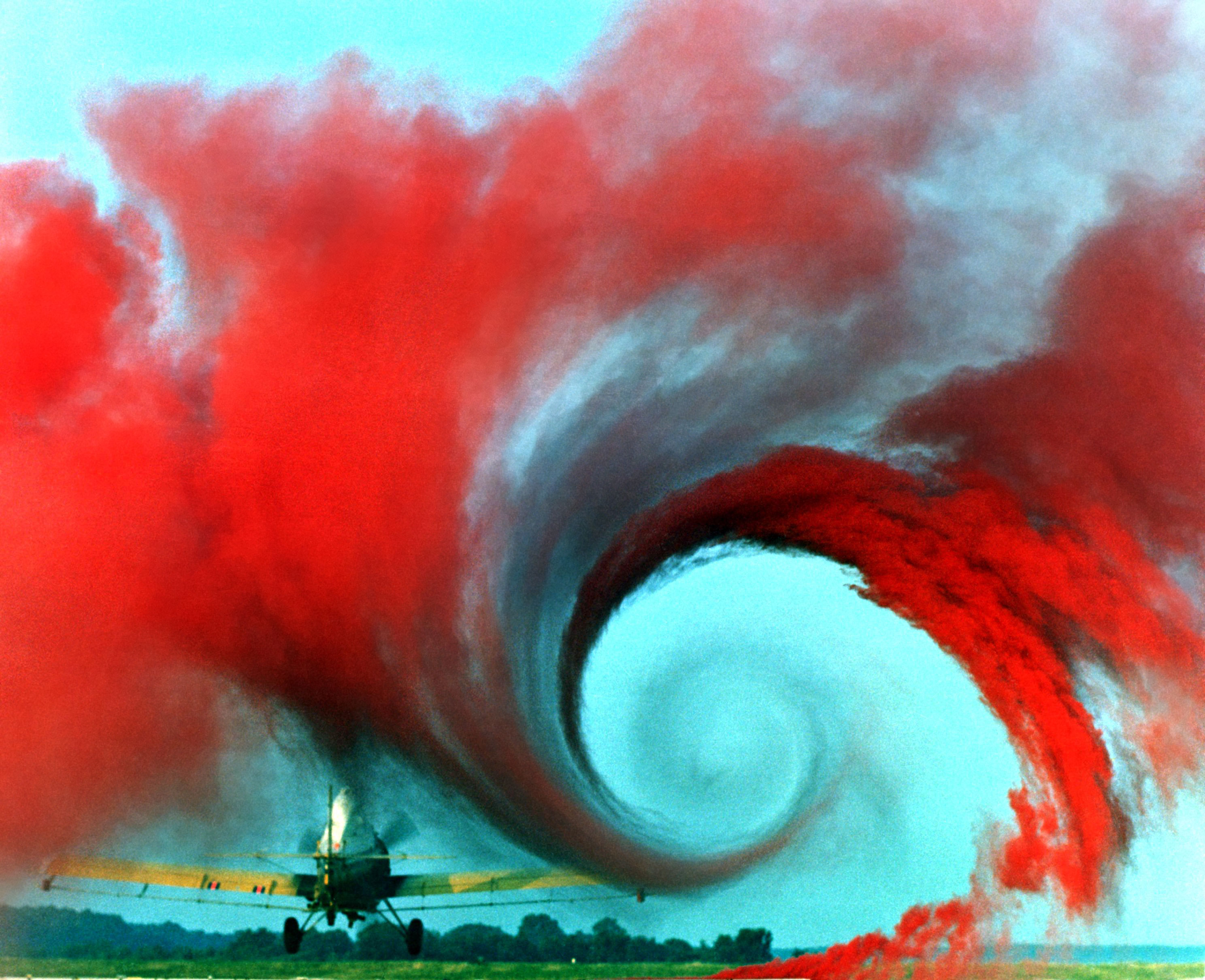
A vortex is fundamentally a region within a fluid where the flow revolves around an axis, manifesting in phenomena as diverse as the majestic swirl of a…
Contents
Overview
The concept of the vortex, as a distinct swirling motion in fluids, has been observed and pondered for millennia, though its formal scientific study is more recent. Ancient mariners undoubtedly witnessed the dangerous whirlpools of the sea, and early natural philosophers noted the swirling patterns in smoke and water. The mathematical description of fluid motion, which underpins the understanding of vortices, began to take shape with the work of mathematicians like Leonhard Euler in the 18th century, who developed foundational equations for fluid dynamics. Later, George Stokes and Hermann von Helmholtz in the 19th century made significant contributions to understanding the behavior and conservation of vortices. The 20th century saw a deeper exploration of vortices within the context of turbulence and complex fluid flows, driven by advancements in experimental techniques and computational fluid dynamics, leading to a more nuanced understanding of their formation, interaction, and dissipation.
⚙️ How It Works
At its core, a vortex is characterized by fluid particles moving in roughly circular or helical paths around an axis. This rotational motion is often accompanied by a pressure drop along the axis, a phenomenon explained by Bernoulli's principle, which states that as fluid speed increases, its pressure decreases. The strength of a vortex is often quantified by its circulation, a measure of the total velocity around a closed curve encircling the vortex core. Vortices can be irrotational (where the fluid velocity is zero at the center, like in a bathtub drain) or rotational (where the velocity is finite at the center, common in turbulent flows). They can form spontaneously due to instabilities in flow, be generated by solid boundaries (like the wingtip vortices shed by aircraft), or be induced by external forces, and once formed, they can interact, merge, stretch, and dissipate through viscous forces or by transferring energy to smaller scales of turbulence.
📊 Key Facts & Numbers
Vortices are quantified across a staggering range of scales. A single tornado can have wind speeds that can be extreme. Tropical cyclones, like Hurricane Katrina, can span hundreds of miles in diameter. A typical bathtub drain vortex might have a diameter of only a few inches. In astrophysics, accretion disks around black holes can form massive vortices. Even in biology, the flagellar motion of bacteria can create microscopic vortices.
👥 Key People & Organizations
Key figures in the study of vortices include Leonhard Euler, whose 18th-century work laid the groundwork for fluid dynamics; George Stokes, who formulated the Navier-Stokes equations and studied vortex motion; and Hermann von Helmholtz, whose theorems on vortex lines are fundamental. In modern fluid mechanics, researchers at institutions like the MIT Department of Mechanical Engineering and Stanford University continue to advance our understanding through advanced simulations and experiments. Organizations like the National Weather Service and the ECMWF rely heavily on vortex dynamics for weather prediction. In biology, taxonomists like those at the World Register of Marine Species (WoRMS) classify organisms like the genus Vortex.
🌍 Cultural Impact & Influence
The imagery and concept of the vortex permeate human culture, often symbolizing power, chaos, or transformation. From the ancient Greek myth of Scylla and Charybdis—a whirlpool and a monster representing dangerous, inescapable forces—to modern depictions in films like Twister and video games, vortices capture the imagination. In art, artists like J.M.W. Turner depicted the raw power of nature through swirling seas and storms. The term 'vortex' itself has entered common parlance to describe any situation of intense activity or confusion, such as a 'vortex of despair' or a 'vortex of activity.' This cultural resonance highlights how deeply these natural phenomena are embedded in our collective consciousness, often representing both destructive potential and fundamental cosmic order.
⚡ Current State & Latest Developments
Current research into vortices is highly active, particularly in understanding complex turbulent flows and their role in phenomena like atmospheric convection and oceanic currents. Scientists are using advanced computational fluid dynamics (CFD) simulations to model the behavior of vortices in extreme conditions, such as those found near black holes or within fusion reactors. In meteorology, ongoing efforts focus on improving the prediction of tornado genesis and the intensity of hurricanes by better understanding the underlying vortex dynamics. Biologists continue to study the micro-vortices generated by swimming microorganisms, which can influence nutrient transport and predator-prey interactions in aquatic environments.
🤔 Controversies & Debates
A significant debate surrounds the precise mechanisms of tornado genesis, with ongoing research seeking to definitively link specific atmospheric conditions and vortex dynamics to the formation of these destructive storms. The role of viscosity in the dissipation of vortices, particularly in turbulent regimes, remains a complex area of study, with different theoretical models offering varying predictions. In the biological realm, the classification and evolutionary relationships within the genus Vortex (flatworms) are subjects of ongoing taxonomic and phylogenetic debate among zoologists. Furthermore, the potential for harnessing vortex energy, while promising, faces challenges related to efficiency and scalability, leading to discussions about its practical viability compared to established renewable energy sources.
🔮 Future Outlook & Predictions
The future of vortex research promises deeper insights into fundamental physics and novel technological applications. Advanced computational models, coupled with increasingly sophisticated sensor technologies, will likely lead to breakthroughs in predicting extreme weather events with greater accuracy, potentially saving lives and reducing economic damage. In astrophysics, the study of accretion vortices around compact objects like neutron stars and black holes could unlock secrets about the formation of planets and the behavior of matter under extreme gravity. Engineers are exploring the use of controlled vortices for more efficient energy generation (e.g., vortex engines) and advanced mixing processes in chemical engineering. The biological understanding of micro-vortices may also lead to new biomimetic designs for propulsion and fluid manipulation at the micro-scale.
💡 Practical Applications
Vortices have numerous practical applications across science and engineering. In aeronautics, understanding wingtip vortices is crucial for designing more efficient aircraft wings, reducing drag and improving fuel economy. In meteorology, the study of atmospheric vortices informs weather forecasting models for phenomena like hurricanes and tornadoes. In marine engineering, knowledge of oceanic vortices is vital for navigation, understanding pollutant dispersal, and designing offshore structures. Controlled vortices are used in industrial mixers, combustion c
Key Facts
- Category
- science
- Type
- topic